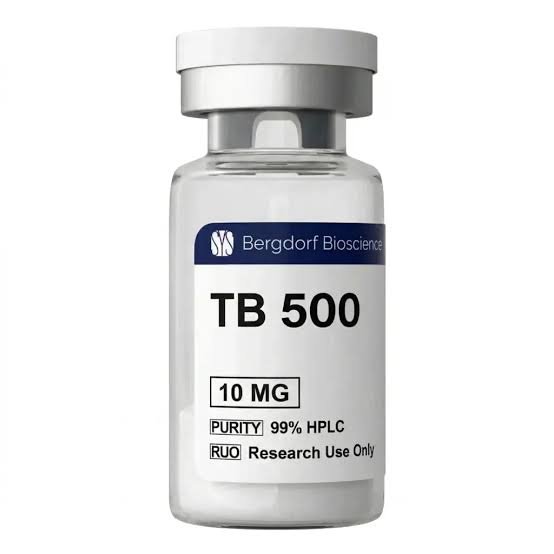
Understanding TB-500
TB-500 is a research product often discussed using thymosin beta-4 literature. The reference highlights the distinction between the seven-amino-acid fragment and the full-length parent peptide. Parent-molecule wound-healing trials do not establish a TB-500 fragment injection protocol.
TB-500
Thymosin beta-4 fragment
Seven-amino-acid fragment
Fragment structure
Full-length thymosin beta-4
Parent peptide
Wound-healing research
Primarily parent-peptide research
Fragment-specific human safety
Not established
Identity and sequence
Require careful verification
Important Evidence Note
Human trials involving full-length thymosin beta-4 do not establish the safety, effectiveness, or injection protocol of the TB-500 fragment. The identity and sequence of a product should be carefully checked.
TB-500 Reported Dose Patterns
The reference describes two reported community patterns for TB-500. These are not clinically validated human treatment protocols. Research involving full-length thymosin beta-4 represents a different evidence context.
SC example
Per administration
Frequency
Daily total
Reported cycle
Community Pattern A
4–5 mg/week during weeks 1–6; 2–2.5 mg/week during weeks 7–12
Twice weekly initially; then once weekly
Not applicable; weekly amounts reported
12 weeks, followed by 4–8 weeks off
Community Pattern B
2–2.5 mg every 2–3 days during weeks 1–2; then weekly through week 8
Every 2–3 days initially; then weekly
Not applicable; frequency changes during the reported pattern
8 weeks
Full-Length Thymosin Beta-4 Research
Not established for TB-500 fragment
Not applicable to TB-500 fragment
Not established
No validated TB-500 fragment cycle
Per administration
4–5 mg/week during weeks 1–6; 2–2.5 mg/week during weeks 7–12
Frequency
Twice weekly initially; then once weekly
Daily total
Not applicable; weekly amounts reported
Reported cycle
12 weeks, followed by 4–8 weeks off
Per administration
2–2.5 mg every 2–3 days during weeks 1–2; then weekly through week 8
Frequency
Every 2–3 days initially; then weekly
Daily total
Not applicable; frequency changes during the reported pattern
Full-Length Thymosin Beta-4 Research
Per administration
Not established for TB-500 fragment
Frequency
Not applicable to TB-500 fragment
Daily total
Not established
Reported cycle
No validated TB-500 fragment cycle
These are reported community patterns, not validated human treatment protocols. Full-length thymosin beta-4 trials are different evidence and do not establish a TB-500 fragment injection regimen.
Fragment-Specific Evidence Limitation
No published human injection RCT establishes the safety or effectiveness of the seven-amino-acid TB-500 fragment. Community schedules should not be interpreted as clinically validated treatment recommendations.
TB-500 Safety Considerations
The reference reports that fragment-specific human safety data are absent. Tumour-related and immune-related concerns are theoretical, and anecdotal effects have not been quantified.
TB-500 Storage and Product Handling
Mixed Fragment
No universal mixed-fragment discard period is established.
Storage Duration
Source pages provide inconsistent storage durations.
Product Formulation
Storage stability may differ between specific research formulations.
Product Verification
Verify the exact product identity and formulation-specific storage instructions.
TB-500 Concentration Calculator
The reference provides independently recomputed mathematical concentration examples. These calculations are examples only and are not mixing or administration instructions.
Amount (mg)
Final volume (mL)
Concentration (mg/mL)
Per 1 U (mcg)
Per 10 U (mcg)
Concentration (mg/mL)
3.333
U means a U-100 volume marking: 1 U = 0.01 mL. These are mathematical examples only, not mixing or administration instructions.
TB-500 Clinical Findings
Human trials primarily concern full-length thymosin beta-4, including intravenous safety research and topical wound studies. The seven-amino-acid TB-500 fragment lacks a published human injection RCT.
Full-Length Thymosin Beta-4
Clinical research has primarily investigated full-length thymosin beta-4 rather than the TB-500 fragment.
Human Clinical Research
Human research includes intravenous safety studies and topical wound-related trials involving the parent peptide.
Evidence Limitation
The seven-amino-acid TB-500 fragment lacks a published human injection RCT. Parent-peptide findings should not be presented as proof of fragment safety or effectiveness.
TB-500 Regulatory Status
Research Product Evidence Limitation
The reference describes TB-500 as a research product and distinguishes it from full-length thymosin beta-4. Human trials involving the parent peptide do not establish an approved TB-500 fragment injection protocol or confirm the safety and effectiveness of fragment products.
TB-500 fragment research remains limited by the absence of published human injection RCT evidence. Product identity, sequence, and the distinction between fragment and parent peptide are essential when interpreting available research.