Peptide protocols, laid out clearly.
Reconstitution, cycle length, stacking and a full safety page for every compound. Read it here, then check it with your clinician.
Start with what you want to do.
Nine groups, sorted by mechanism. Pick one to see every compound in it.
18
Compounds
Fat loss and metabolism
GLP-1 agonists, mitochondrial peptides, lipotropics.
Fat loss and metabolism
14
Compounds
Growth hormone axis
Secretagogues and growth hormone itself.
11
Compounds
Tissue repair and recovery
Healing, skin, gut and connective tissue.
16
Compounds
Cognitive and neuroprotective
Focus, mood, sleep and nerve support.
11
Compounds
Reproductive and hormonal
HPG axis, libido and fertility.
7
Compounds
Longevity and bioregulators
Short peptides taken in periodic courses.
9
Compounds
Blends and mixed protocols
Pre-mixed vials with fixed ratios.
6
Compounds
Supplements and cofactors
Diluents, buffers and helpers.
4
Compounds
Specialty and other
Compounds that fit nowhere else.
Every compound gets the same two pages.
Compare any two peptides side by side with clear, organized information, making it easy to explore the details, understand the differences, and find everything you need in one place—without wasting time searching across multiple pages.
- Protocol page for reconstitution, cycle and stacking
- Safety page for interactions, labs and stop criteria
- Linked references to FDA labels and PubMed
BPC-157
Tissue repair and recovery
Reconstitution
Diluent and volume for your vial size.
Protocol
Dose range, route and timing.
Cycle length
How long to run it and when to rest.
Handling
Storage and shelf life after mixing.
Stacking
Pairs well with / does not pair with.
References
Linked FDA, PubMed and trial sources.
BPC-157
Tissue repair and recovery
Contraindications
Who should not use it.
Warnings
What to watch for in use.
Drug interactions
Medicines that change the risk.
Pregnancy and lactation
Guidance for both.
Labs
Which markers to test, and when.
Stop criteria
Signs that mean stop and call a clinician.
What people read most.
Ranked by community use. Scroll sideways for the full list.
01
BPC-157
Gut and tissue repair. The most-used research peptide.
02
Cagrilintide
03
CJC-1295 + Ipamorelin
Supports natural growth hormone pulses.
04
GHK-Cu
Skin, hair and connective tissue repair.
05
Glutathione
Antioxidant that supports the liver.
06
HCG
Preserves natural testosterone during TRT.
07
HGH (Somatropin)
FDA approved. Used off-label by adults.
08
MOTS-c
Mitochondrial peptide for energy and metabolism.
09
NAD+
Cellular energy support that declines with age.
10
PT-141
Libido support. FDA approved as Vyleesi.
11
Retatrutide
Strongest weight-loss results in human trials so far.
12
TB-500
Soft tissue and vascular repair.
13
Tesamorelin
Targets visceral fat. FDA approved as Egrifta.
Blends.
Pre-mixed vials for people running the same schedule.
GLOW Blend
KLOW Blend
Blends fix the ratio between components. Run the peptides separately if you want to
adjust one on its own.
Know your numbers.
US adult ranges for orientation. Your lab may differ by 5 to 15 percent, and age and sex change what is normal.
Marker
Normal range
Note
Fasting glucose
70–99 mg/dL
Pre-diabetes 100–125. Diabetes 126 or higher.
HbA1c
eGFR
Hematocrit
TSH
Vitamin D (25-OH)
Explore Our Latest Research Guides .
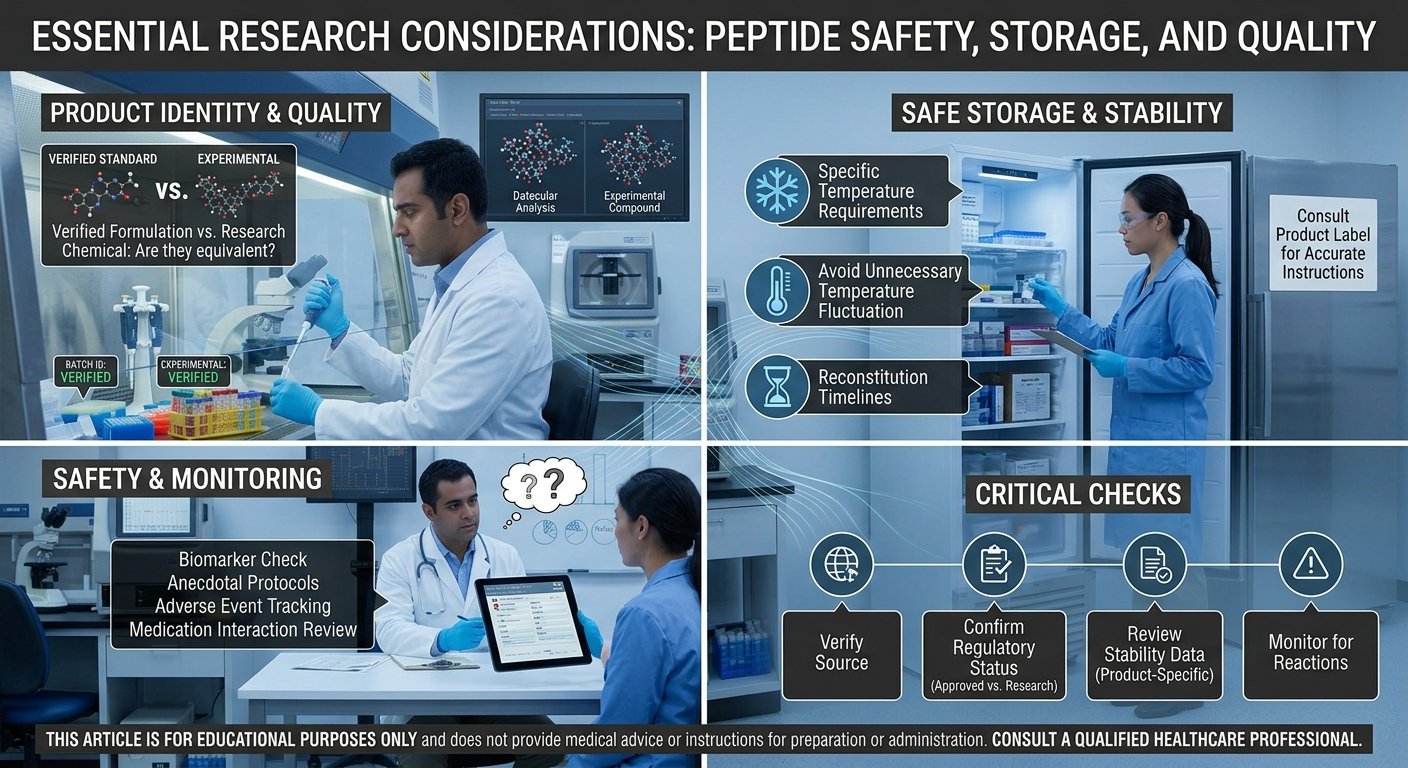
Peptide Safety, Storage, and Product…
Peptide Safety, Storage, and Product Quality: Essential Research Considerations When…
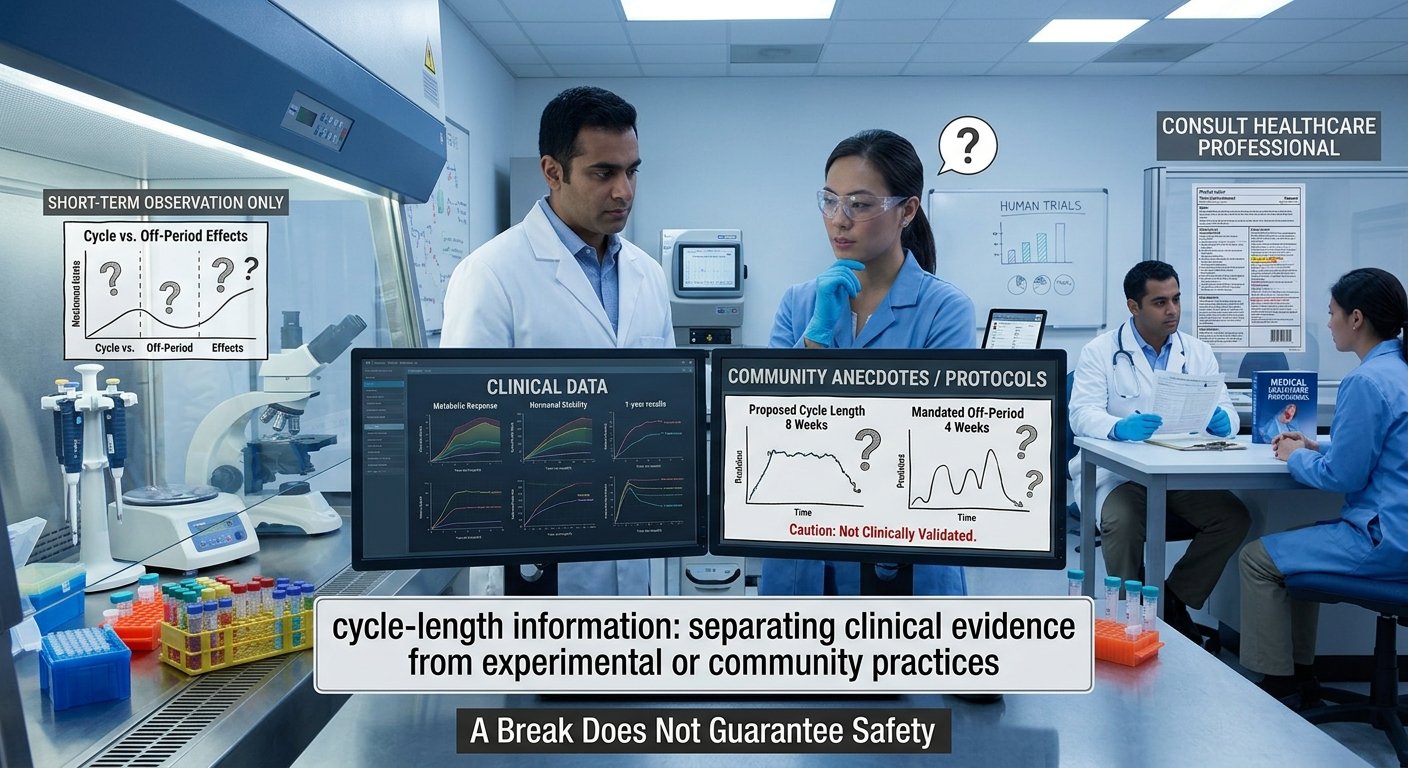
Understanding Peptide Cycle Length
Understanding Peptide Cycle Length: Research, Evidence, and Safety Peptide-related websites…
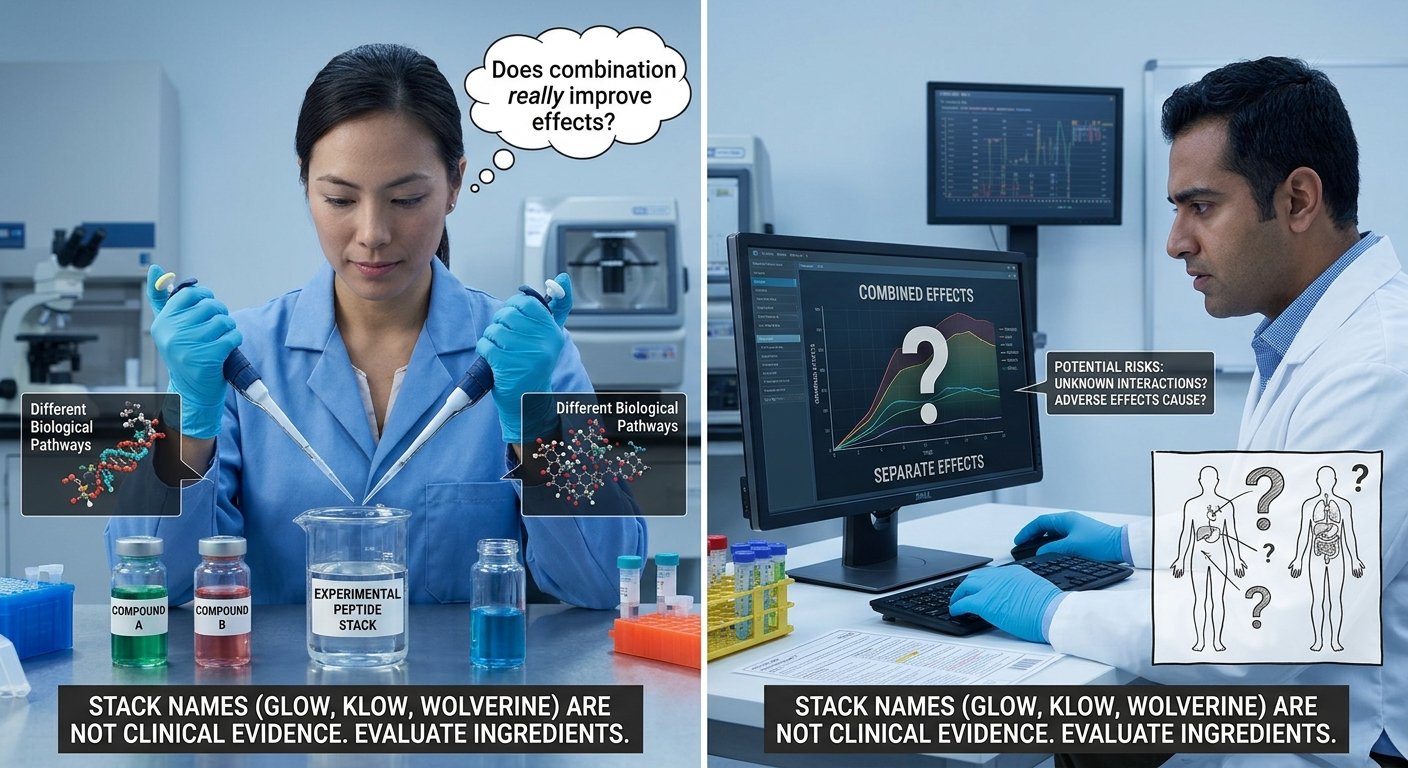
Peptide Stacks Explained
Peptide Stacks Explained: What to Know Before Comparing Combinations The…
Frequently Asked Questions.
Peptide Dosing Protocols is an educational reference website covering peptide guides, stacks, cycles, research, and safety information.
Our guides cover available protocol information, formulations, research evidence, safety considerations, and monitoring topics where information is available.
No. Evidence varies by peptide. Some information comes from clinical research, while other practices may be based on limited evidence or unvalidated reports.
No. The information is for educational purposes and is not a personal dosing recommendation. Consult a qualified healthcare professional for medical guidance.
Stacks refer to combinations of peptides, while cycles describe planned periods of use discussed in peptide-related resources. Their safety and effectiveness are not established for every combination or approach.
No. This website provides educational information only and is not a substitute for professional medical advice, diagnosis, or treatment.